Background
For students and young professionals in India, a laptop often serves several roles: a classroom, a workspace for coding, a creative tool and a way to build a business. Supporting these activities requires responsive applications, efficient multitasking and the flexibility to adopt new tools as users’ needs change.
Primebook, an Indian deep-tech company founded by IIT Delhi alumni Aman Verma and Chitranshu Mahant in 2018, designs its computing platform around these users. Its approach brings purpose-built hardware together with the Company’s proprietary OS, PrimeOS, built on Android technology and its underlying Linux Kernel, plus its native applications and services.
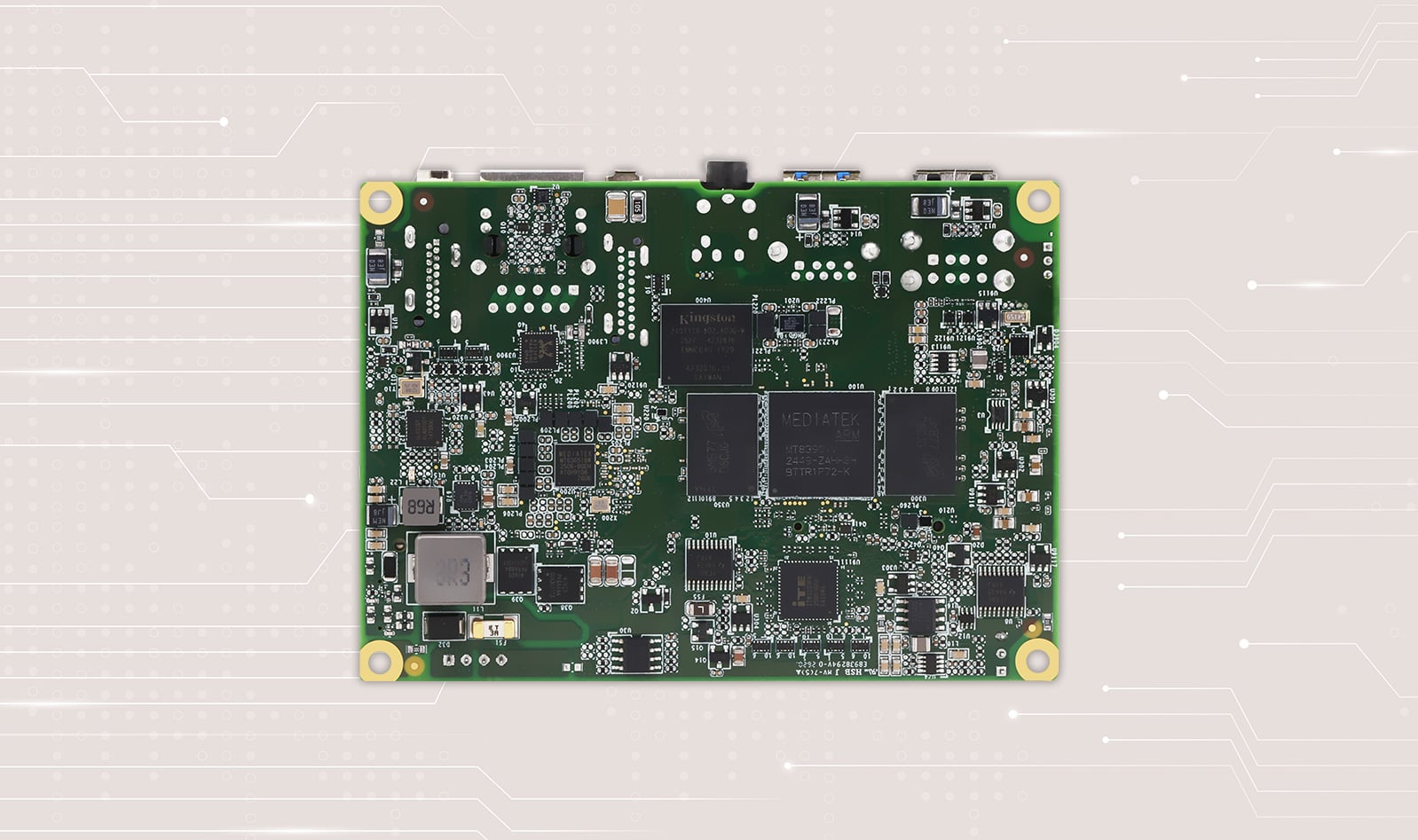
With Primebook 3, the company set out to expand that experience through stronger processing performance, faster memory and dedicated on-device AI capabilities. Primebook selected the MediaTek Genio 720 to provide the hardware foundation for this next stage of development, enabling the company to optimize the laptop and its software together.
Challenge

Dedicated Processing for On Device AI
Primebook 3 needed dedicated AI acceleration for supported local workloads, improving responsiveness and reducing reliance on cloud processing.

Faster Memory and Expanded Connectivity
Primebook wanted LPDDR5 memory, USB3.2, DisplayPort and 4K video decoding. Upgraded Wi-Fi and Bluetooth capabilities were also needed.

Coordinated Hardware and Software Development
Prime OS, its built‑in applications and services, and the hardware needed to work together on a common platform that could be optimized across performance, power consumption and AI processing.

Responsive Computing Within an Accessible Platform
Primebook needed to support increasingly demanding workflows while maintaining its focus on accessible computing. Arm architecture was a natural fit for the Android technology underlying the operating system. Primebook identified slow boot and application‑loading times, limited performance, compatibility constraints and battery‑efficiency challenges in India’s laptop segment under ₹40,000. Addressing those issues shaped the company’s decision to design the operating system and hardware together.
MediaTek Solution
The MediaTek Genio 720 brought these requirements together in an edge AI platform combining an octa-core CPU, a dedicated neural processing unit (NPU), LPDDR5 support and advanced multimedia interfaces. Its capabilities aligned with the hardware architecture Primebook wanted for Primebook 3 and the continued development of PrimeOS.
- Efficient Processing for Everyday Workflows: The Genio 720 combines two Arm Cortex-A78 cores running at up to 2.6GHz with six Arm Cortex-A55 cores running at up to 2.0GHz. This configuration gives Primebook 3 a stronger processing foundation while retaining the efficiency benefits that made Arm central to Primebook’s design strategy.
- Long Battery Life: Built on a 6nm process, the platform supports Primebook’s goal of balancing computing capability with low-power operation. LPDDR5 memory complements the processor, providing the memory architecture needed for more demanding applications and multitasking. Together, these capabilities allow Primebook to optimize system responsiveness within its hardware and software stack.
- AI Acceleration Built into the Platform: The integrated eighth-generation MediaTek NPU provides up to 10 TOPS (trillion operations per second) of dedicated total system AI performance. This gives Primebook 3 dedicated hardware for supported speech, image-processing and generative AI workloads. That range gives Primebook a hardware platform suited to different types of AI processing as it develops and enables supported software experiences. Processing supported AI functions locally can reduce cloud round trips and improve responsiveness while allowing relevant data to remain on the device. The NPU also provides an efficient alternative to placing every AI task on the CPU, helping Primebook accommodate AI alongside the laptop’s other workloads. This capability supports Primebook’s direction toward more agentic computing as it develops services such as PrimeAGNT, which is designed to execute tasks across applications and the web. Dedicated AI hardware gives Primebook scope to expand local processing as its software evolves.
- Connectivity and Multimedia for Broader Use: USB 3.2 and DisplayPort support give Primebook 3 a more versatile hardware platform for peripherals and external displays. The Genio 720 also supports 4K video decoding, addressing Primebook’s requirement for higher-resolution media playback. Primebook 3 adds Wi-Fi 6 and Bluetooth 5.3 connectivity to support modern wireless networks and peripherals.
- A Platform Designed Around PrimeOS: Primebook integrates these capabilities with a software environment that includes PrimeOffice for offline-first documents, spreadsheets and presentations, and PrimeLinux for selected Linux applications and a terminal. By controlling both the hardware and PrimeOS, Primebook can tune the computing experience as a complete system and support users moving between learning, productivity and development tasks. The wider environment includes the Prime App Store for Android applications and keymapping for mobile-first apps and games. Task Manager supports device and application management, while PrimeSecurity addresses app safety and device health. For users who need additional software environments, PrimeX Cloud PC offers subscription-based access to virtual Windows and Linux systems. These services complement the laptop’s local capabilities and give Primebook users several ways to access the tools their work requires.

How MediaTek Genio 510 Platform Met the Requirements
The integration of the MediaTek Genio 510 was crucial to the application’s need for low-power, high performance operation:
-
Multi-Core Processing: The MediaTek Genio 510’s hexa-core Arm® Cortex® processing provided excellent multi-tasking capabilities while maintaining the power-efficiency needed for continuous operation on the edge.
-
Versatile OS Support: OS support for Android, Yocto Linux, and Ubuntu opened the door to a greater breadth of environments through which the customer could run their application on AAEON hardware.
-
Native High-Resolution Displays: The MediaTek platform offered native video encoding/decoding and superior visual rendering capabilities to produce smooth, intelligent visuals via a selection of supported display interfaces.